


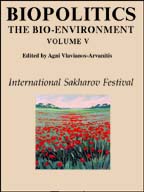
Cover from painting by Giorgio Oikonomoy,
Campo di papaveri, 80×80 cm
Superlatives have long since become redundant when referring to Andrei Sakharov, one of the great heroes of the twentieth century and an inspiration to all who have dedicated their life to making this world a better place for the future. His legacy as a world-renowned physicist and human rights activist is unsurpassed. To celebrate his memory and promote the ideals he fought for all his life, the Biopolitics International Organisation (B.I.O.) held the International Sakharov Festival in Athens, July 28-31, 1994, with the theme “Biopolitics – the Bio-Environment – Bio-Culture in the Next Millennium.”
But more than just a tribute to Andrei Sakharov, the International Sakharov Festival was a celebration of life. With the eminent musician and humanitarian Mstislav Rostropovich presiding and Elena Bonner, Andrei Sakharov’s widow as the guest of honour, the Festival brought together leading personalities from around the world in an attempt to strengthen the concept of a global bio-culture for the next millennium.
This initiative constituted a conscious effort to take the issue of bio-environmental protection one step further. Outside the confines of conventional approaches to environmental matters, bio-culture represents a global appreciation of bios. The bio-environment has always been the single most important correlation in human society. In this crucial period of transition, the bio-environment can help transcend boundaries and attain international co-operation and understanding, so critical for the future of humanity. Many people believe that humanity lives in an era of decline. A global shadow of environmental threats shows the approaching dangers that jeopardise our very existence on this planet. Bios has evolved for billions of years. As we are standing on the doorstep of a new millennium, we need to awaken our senses and appreciate this precious gift.
The International Sakharov Festival consisted of a Gala Concert and a Conference, both of which focused on promoting bio-environmental preservation, music, science, politics and economics as interrelated elements in the struggle for a better quality of life. The theme of an international bio-culture, where peace, human rights and environmental harmony constitute key factors in world decision-making, emerged as the most important aspiration for society in the 21st century. Furthermore, due to its multidisciplinary nature, the Festival served as a precursor for the B.I.O. Environmental Olympics, a long-term endeavour to place a conscious appreciation of bios at the core of every action and thought.
The Gala Concert took place at the ancient theatre of Herod Atticus, at the foot of the Acropolis, with performances from Cellist Mstislav Rostropovich, Soprano Hildegard Behrens, Violinist Leonidas Kavakos and Pianist Dimitris Sgouros. The soloists were accompanied by the Athens State Orchestra, conducted by Yuri Temirkanov.
The Conference served as a forum for the exchange of ideas on the importance of incorporating the principle of environmental protection in every field of human achievement. World experts in diplomacy, education and business contributed their viewpoints with reference to adopting new policy and more effective measures to safeguard our planet for the generations to come.
For his invaluable assistance with the organisation of the entire event, a very special appreciation is extended to Christos Efthymiopoulos. I would also like to thank Allison Graham, Barbara Wright and Helen Papadimitriou for their editorial work and contribution to the preparation of this volume of proceedings.
On behalf of the Board of Trustees of the Biopolitics International Organisation, I express my most heartfelt gratitude to the B.I.O. sponsors who made the event and this publication possible, as well as to the Honorary Committee and to all participants, supporters and friends for helping to dynamically promote the B.I.O. goals and to whom the International Sakharov Festival owes most of its success.
Dr. Agni Vlavianos-Arvanitis
B.I.O. President and Founder
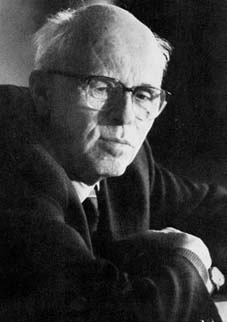 Andrei Dmitrievich Sakharov was born in Moscow, on May 21 1921, to Dmitry Ivanovich Sakharov, a Physics Professor, and Ekaterina Alexeeva Sakharova (nee Sophiano). His grandfather, born on the Greek island of Zeya, had become a Russian citizen and was granted a title by Catherine II.
In 1938, he enrolled in the Department of Physics at Moscow University and received his Doctoral Degree from the Lebedev Physics Institute of the Academy of Sciences in 1948. Upon completion of his studies, he joined a research team developing thermonuclear weapons and has often been referred to as “the father of the hydrogen bomb.” After major contributions in thermonuclear physics, cosmology, field theory and elementary particle physics, he was elected as a full member of the Academy of Sciences of the USSR, in 1953.
His public activism grew between 1956-62 and in 1963, he was an initiator of the Moscow Test Ban Treaty. His long essay, Thoughts on Progress, Peaceful Co-existence and Intellectual Freedom, published in 1968 and widely disseminated in the West, resulted in his being denied access to secret projects. In 1969 he donated his life savings (139,000 roubles) to the Red Cross in Moscow.
In 1970, he established the Committee for Human Rights, an action which marked a period dedicated to the struggle for all forms of freedom and resulted in his being awarded the Nobel Peace Prize in 1975. In the lecture he delivered during the award ceremony, he is noted for stating: “Peace, Progress and Human Rights – these goals are inseparably linked and none of them can be attained if another is ignored.”
In 1980, Sakharov was exiled to Gorky without trial and was progressively stripped of all his awards, prizes and titles by Decree of the Supreme Soviet. Despite the difficulties, he kept up his public activism and scientific work, including an open letter to Brezhnev on Afghanistan as well as an article on The Threat of Thermonuclear War. He also held four long hunger strikes, protesting against political pressure placed upon his family.
In 1986, he was released and in 1987, spoke on disarmament at the International Forum for a Nuclear-Free World and Disarmament, proposing the “two-track strategy” which was subsequently adopted by Gorbachev. In 1989, he was elected to the Congress of People’s Deputies and, as a member of its Constitutional Commission, presented a draft for a new constitution of the USSR, based on the concept of individual rights and all nations’ equal rights to Statehood.
Honoured by foreign academies and universities world-wide, Andrei Sakharov died in December 1989 and was buried in Vostyakovskoye Cemetery, Moscow. His life’s works became available to the general public in 1991.
